

 Feed back
 Privacy Policy
SoulCards
In an era where technology intersects with spiritual growth, the ancient practice of Tarot has undergone a remarkable digital transformation. For centuries, practitioners have used Tarot as a profound tool for self-exploration and subconscious analysis, but today's seekers are increasingly turning to digital and online platforms for their spiritual journeys. This shift raises important questions about authenticity, accessibility, and the evolving nature of personal discovery in our connected world.

The migration from physical decks to virtual interfaces represents more than just technological adoption—it signifies a cultural reimagining of spiritual practice. Where traditional readings required physical presence and tactile interaction, modern virtual coaching platforms have democratized access to Tarot wisdom. According to a 2023 Pew Research study, 42% of Americans under 35 have experimented with some form of digital divination, with Tarot apps showing the most significant growth at 78% year-over-year.
Consider the experience of Maya, a 31-year-old teacher from Austin who discovered Tarot through the popular app "Luminous." Initially skeptical about AI divination tools, Maya found that the app's machine learning algorithms adapted to her emotional patterns over time, offering increasingly relevant insights. "The digital format removed my self-consciousness," she explains. "I could explore difficult emotions privately before seeking human guidance through the platform's virtual coaching service."
Market analysis from Statista reveals compelling numbers:
The digital Tarot landscape presents two distinct pathways: human-mediated virtual coaching and automated AI divination tools. Each approach offers unique benefits that cater to different aspects of the self-exploration and subconscious journey.
Platforms like "SoulTarot" have pioneered hybrid models where certified readers combine traditional interpretation skills with digital tools. Their system tracks client progress across sessions, using data visualization to reveal long-term patterns in the subconscious themes that emerge. "The technology doesn't replace intuition," says lead coach Elena Vasquez. "It enhances our ability to spot connections that might take months to recognize in conventional readings."
Advanced AI divination tools now employ natural language processing and emotional sentiment analysis to customize interpretations. The app "Quantum Tarot," for instance, cross-references users' journal entries with card meanings, creating personalized archetype maps for self-exploration. While limited in emotional nuance, these tools provide 24/7 accessibility that human readers cannot match—particularly valuable during late-night moments of existential questioning.
As mental health awareness grows, Tarot apps are evolving beyond fortune-telling into sophisticated digital and online platforms for psychological well-being. This integration represents perhaps the most significant development in how modern seekers approach self-exploration and subconscious work through ancient divination methods.
Innovative platforms like "MindTarot" combine card readings with evidence-based therapeutic techniques:
A 2023 University of California study found that regular users of such integrated apps showed 28% greater emotional awareness than control groups practicing traditional journaling alone.
The rise of AI divination tools prompts important questions about responsibility in spiritual guidance. Dr. Rachel Kwon, digital ethics researcher at Stanford, warns: "While algorithms can identify patterns, they lack human judgment about when certain truths might cause harm rather than healing." Responsible platforms now incorporate disclaimers and crisis resource links when readings suggest severe emotional distress.
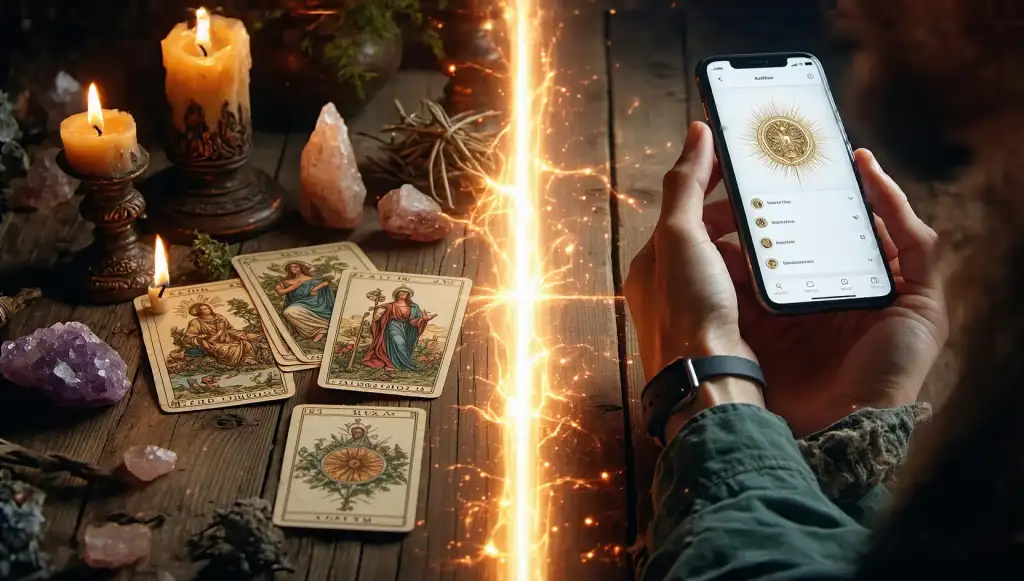
For those beginning self-exploration and subconscious work through digital Tarot, consider these research-backed recommendations:
FAQ:
Can digital Tarot provide the same depth as in-person readings?
While different in experience, high-quality digital and online platforms can achieve comparable insight through layered approaches combining algorithms, human expertise, and structured reflection tools.
How do I choose between AI and human readers?
AI tools excel at pattern recognition and accessibility, while human virtual coaching provides nuanced emotional support. Many find optimal results using both sequentially—AI for daily check-ins, humans for deeper sessions.
Disclaimer: The information provided about Tarot for Self-Exploration and the Subconscious through Digital and Online Platforms, Virtual Coaching, and AI Divination Tools is for educational purposes only. These digital spiritual tools should not replace professional mental health care. Consult qualified practitioners for personal guidance.
Serena
|
2025.08.22
